+A
-A


News stories
Global Platform 2025 Spotlight: A High-Impact Week for APDIM on Disaster Risk Reduction
Geneva, Switzerland, 6 June 2025
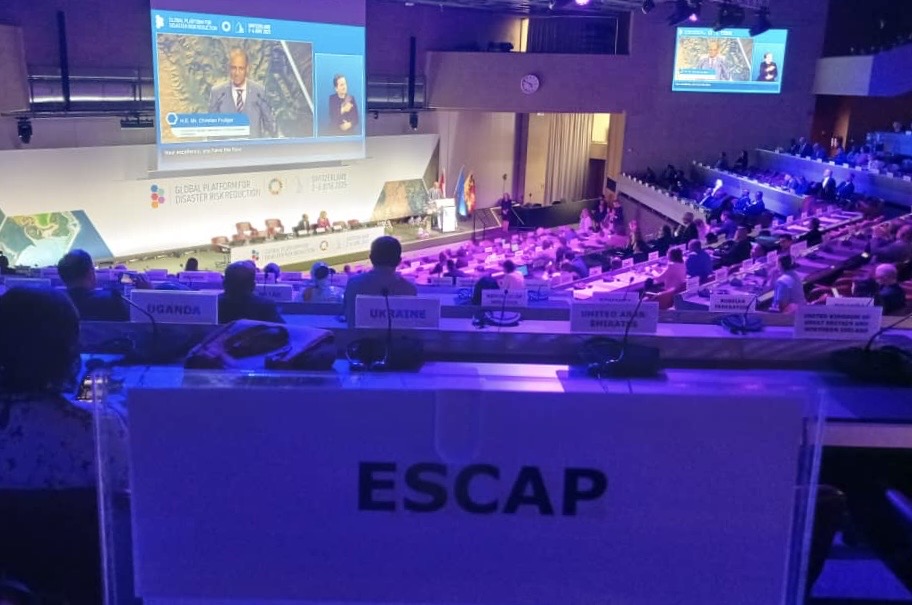
The 8th Session of the Global Platform for Disaster Risk Reduction (GP2025), held from 2–6 June in Geneva, convened over 3,000 stakeholders from 164 countries to assess progress on the Sendai Framework and chart a path for greater resilience. The Platform’s theme — Everyday Counts: Act for Resilience Today — captured the urgency of collective, accelerated action in the face of intensifying risks.
During the Global Platform, APDIM held constructive bilateral meetings with heads of national disaster management authorities and representatives from different countries including Mr. Sanjeev Kumar Jindal, Additional Secretary of the Ministry of Home Affairs of India, Dr. Raditya Jati, Indonesia’s Deputy Minister of System and Strategy, Mr. Hisan Hassan, Chief Executive of Maldives’ National Disaster Management Authority (NDMA), Lieutenant General Inam Haider Malik, Chairman of Pakistan’s National Disaster Management Authority (NDMA), Mr. Rajabali Rahmonali, Chairman of the Committee of Emergency Situations and Civil Defense (CoES) of Tajikistan, and Mr. Ali Hamza Pehlivan, President of Disaster and Emergency Management Authority (AFAD) of Türkiye.
Among the hazards discussed, Sand and Dust Storms (SDS) were highlighted in the Geneva Call for Disaster Risk Reduction, which underscored the need for integrated risk governance and international cooperation to address emerging and transboundary threats like SDS, extreme heat, and glacial lake outburst floods.
This recognition elevates the importance of the side-event, “Integrating Sand and Dust Storms Risk Reduction into Disaster Resilience Strategies”, held on 6 June and co-organized by APDIM and ESCWA, as co-chairs of the United Nations Coalition on Combating Sand and Dust Storms. The event focused on mainstreaming SDS risk into national and local DRR strategies, given the storms' wide-ranging impact on public health, ecosystems, agriculture, infrastructure, and economies — especially in SDS-prone regions.
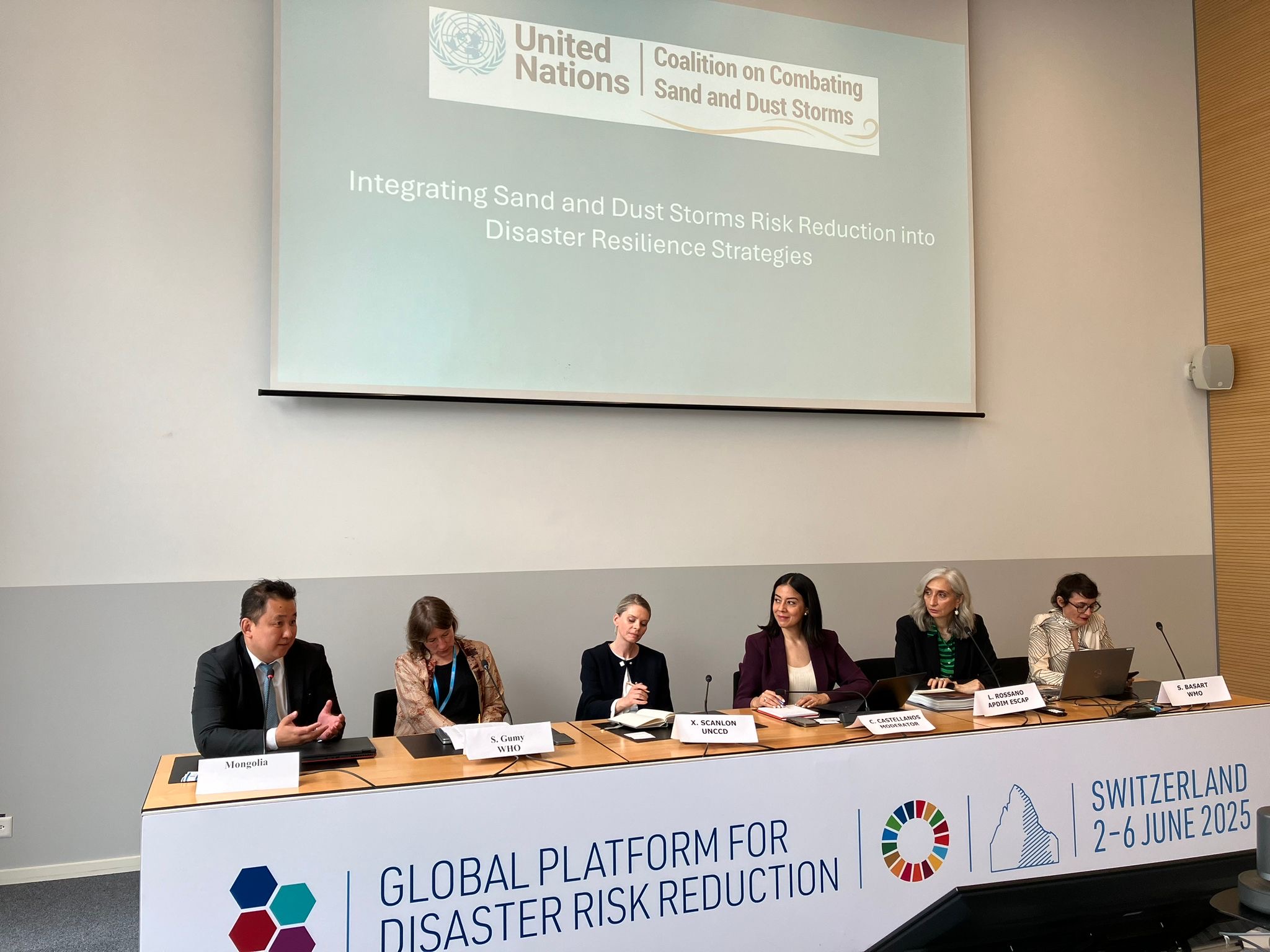
From left to right: Mr. Baasansuren Demberelynam (NEMA Mongolia), Ms. Sophie Gummy (WHO), Ms. Xenya Scanlon (UNCCD), Ms. Carolina Fuentes Castellanos (Santiago Network Secretariat), Ms. Letizia Rossano (APDIM), and Ms. Sara Basart (WMO).
The session began with opening remarks and a keynote address by Ms. Letizia Rossano, Director of APDIM, setting the tone for the critical importance of integrating SDS risk into global DRR and SDG agendas. A panel discussion followed, featuring representatives from key UN agencies — including WMO, WHO, and UNCCD — alongside Mr. Baasansuren Demberelynam, Director of Disaster Risk Management Department at NEMA, National Emergency Management Agency of Mongolia, who discussed the multi-dimensional impacts of SDS and the need for coordinated, cross-sectoral action, an interactive segment.

APDIM team with Mr. Sanjeev Kumar Jindal, Additional Secretary, Ministry of Home Affairs, Government of India, and his delegation.

APDIM team with Dr. Raditya Jati, Indonesia’s Deputy Minister of System and Strategy, and his delegation.
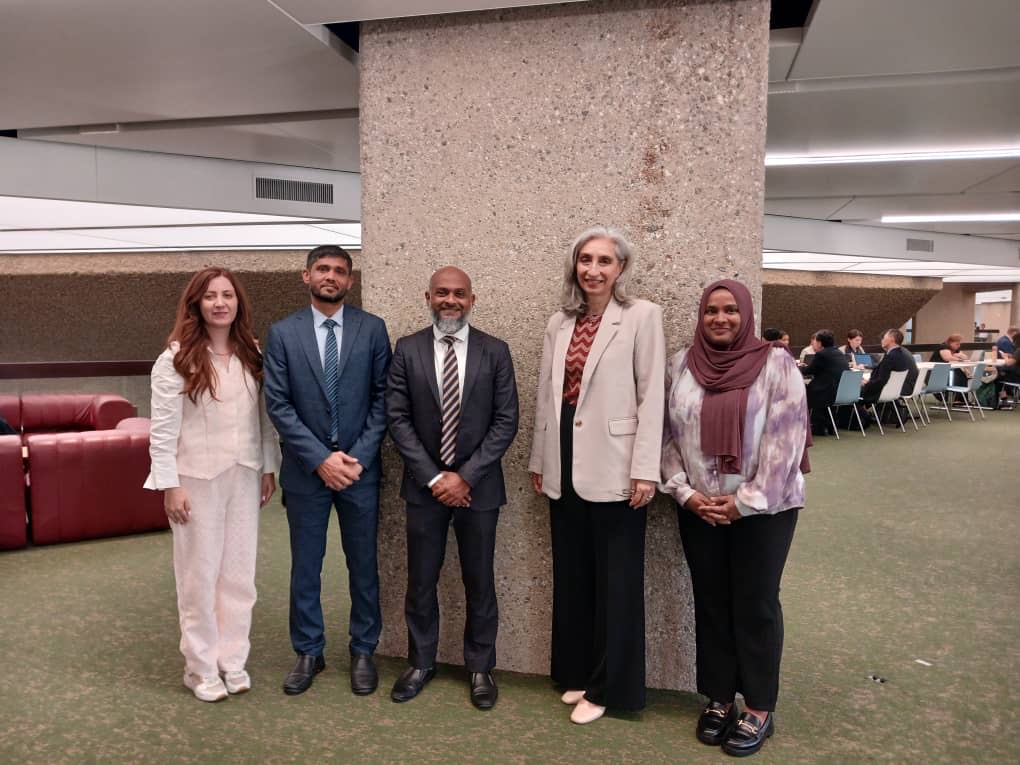
APDIM team with Mr. Hisan Hassan, Chief Executive of the Maldives’ National Disaster Management Authority (NDMA), and his delegation.
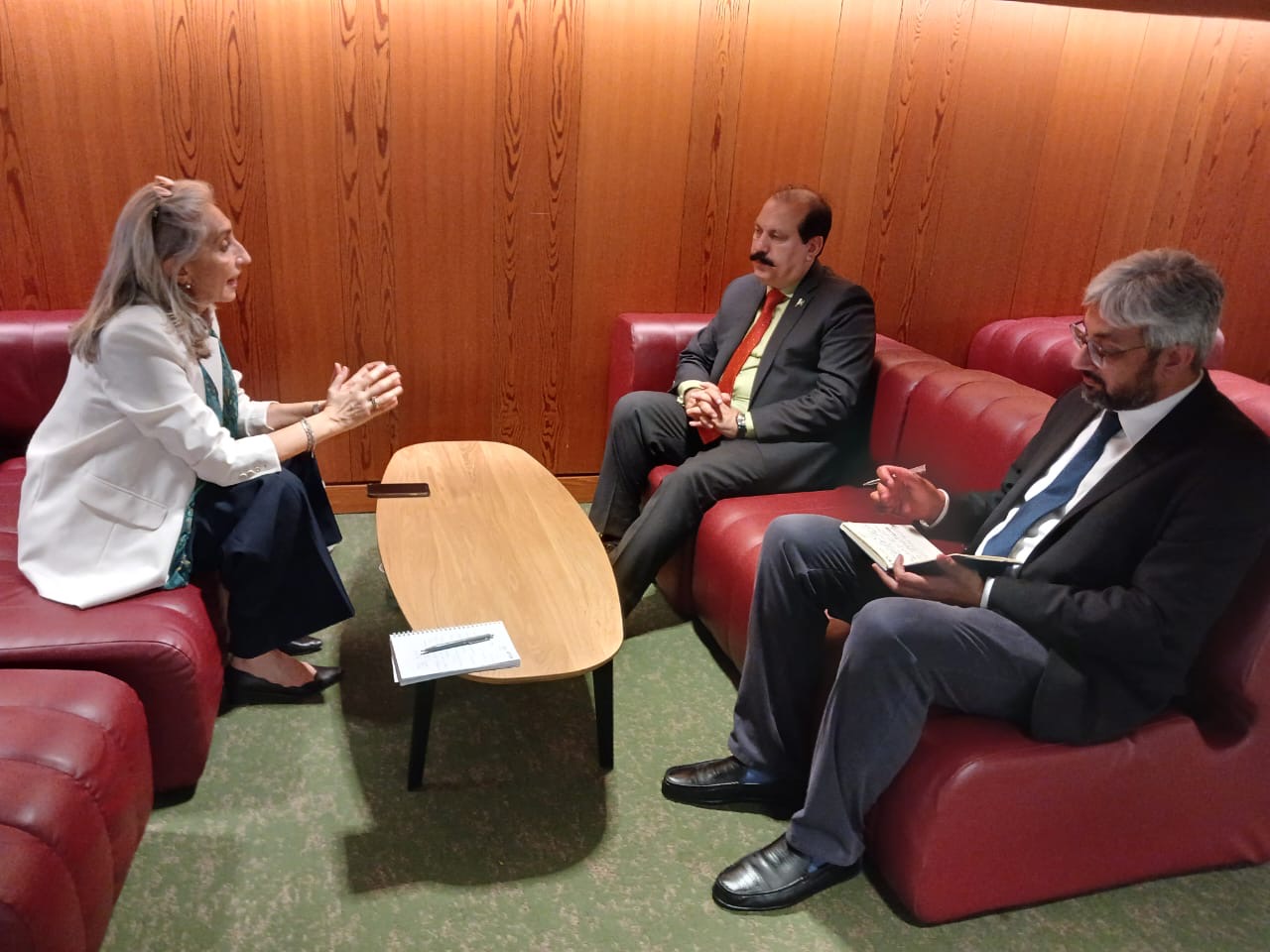
APDIM Director Letizia Rossano with Mr. Muhammad Idrees Mehsud, Member Disaster Risk Reduction (DRR), National Disaster Management Authority (NDMA) of Pakistan and delegation.
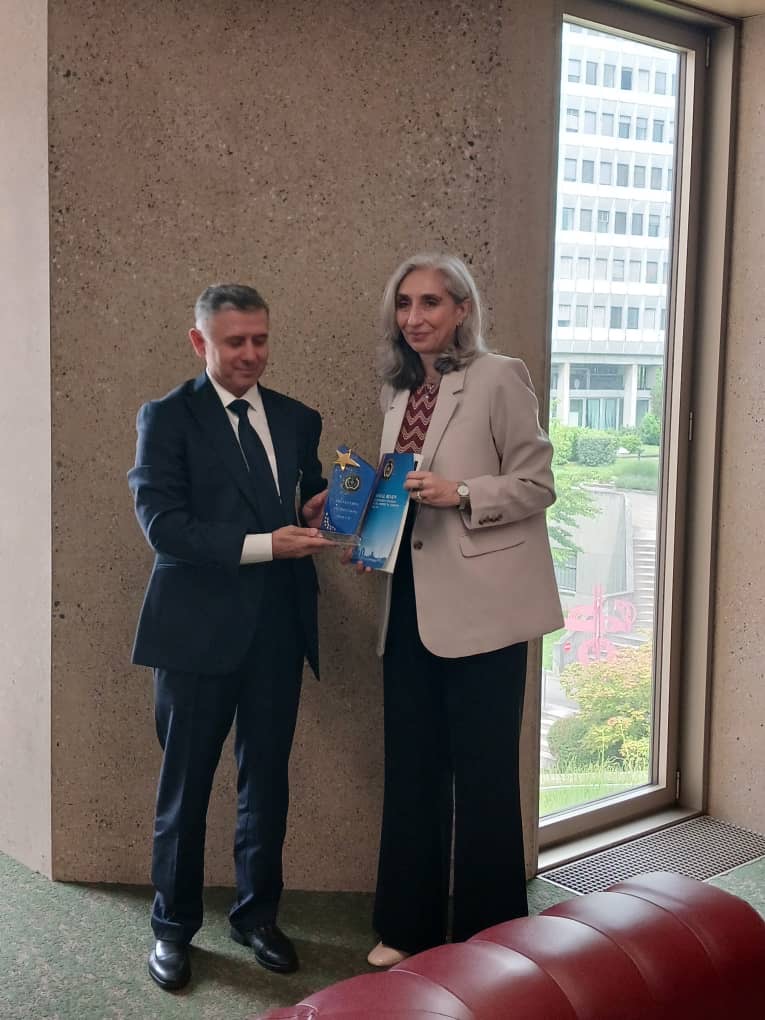
APDIM Director Mr. Rajabali Rahmonali, Chairman of the Committee of Emergency Situations and Civil Defense (CoES) of Tajikistan.
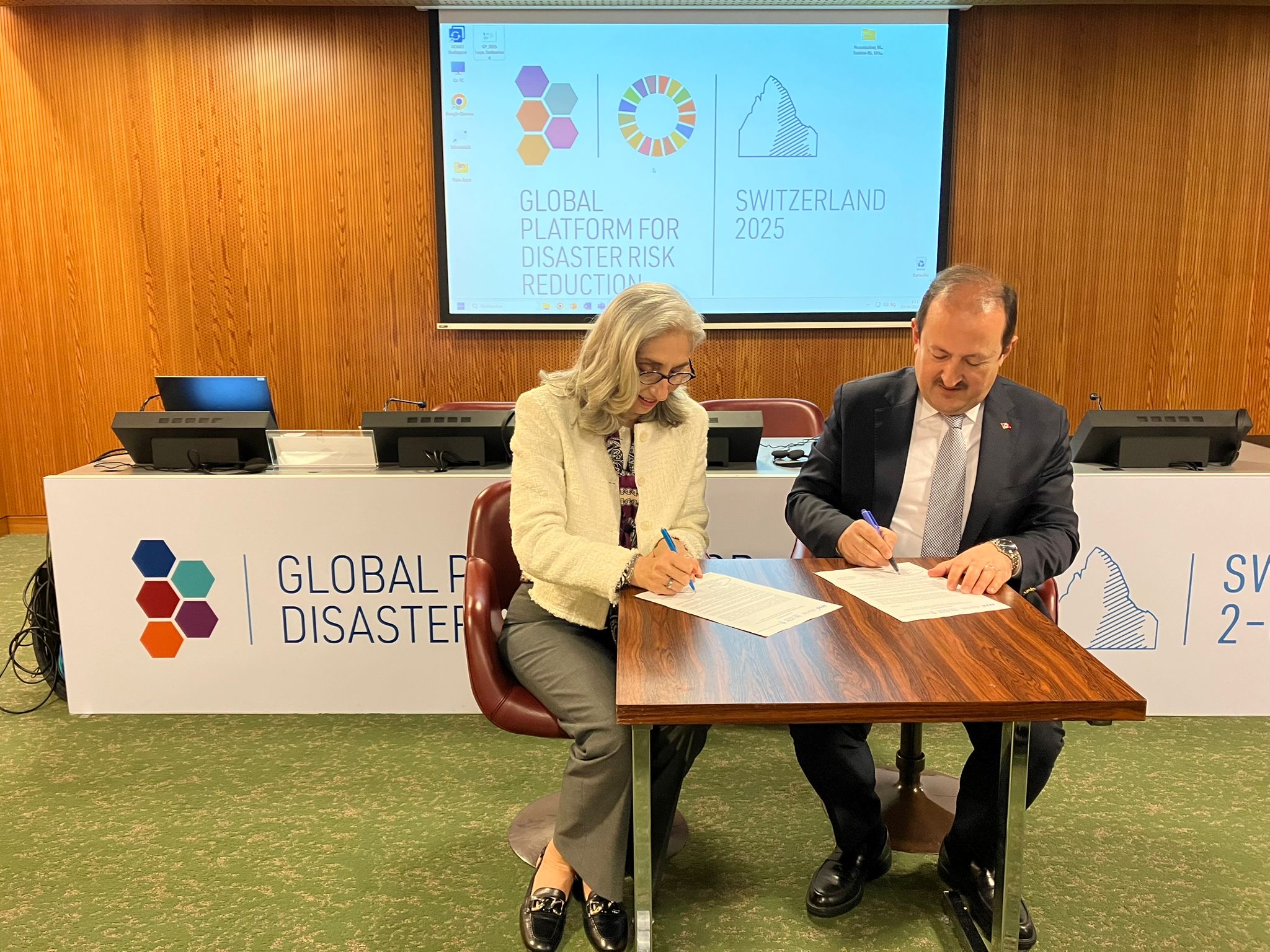
APDIM Director and Mr. Ali Hamza Pehlivan, President of the Disaster and Emergency Management Authority (AFAD) of Türkiye.
No tags applied
Related news
-

Press releases
UN Meeting Opens With Call To Expand Regional Networks On Cross-Boundary Disasters
Asian and Pacific Centre for the Development of Disaster Information Management
19 February 2020
-

News stories
77th session of the Commission
Economic and Social Commission for Asia and the Pacific
20 April 2021
-

Press releases
Call for Regional and Inter-Regional Cooperation to Reduce the Risk and Negative Impacts of Sand and Dust Storms
Asian and Pacific Centre for the Development of Disaster Information Management
7 July 2021
-

News stories
ESCAP Executive Secretary, Ms. Armida Salsiah Alisjahbana, Opening Remarks at APDIM Side Event at CDRR7
Economic and Social Commission for Asia and the Pacific
30 August 2021
-

News stories
Time is ripe to design coordinated actions on sand and dust storms with a transboundary perspective
Asian and Pacific Centre for the Development of Disaster Information Management
21 October 2021
-

News stories
ECO Member Countries Experts Discuss Disaster Risk Reduction And Management for Cascading Risks in the ECO Region
Asian and Pacific Centre for the Development of Disaster Information Management
14 February 2022