+A
-A


News stories
10th Meeting of the United Nations Coalition on Combating Sand and Dust Storms: APDIM Supports a Stronger, More Unified Response to Sand and Dust Storms
Geneva, Switzerland, 20 March 2025
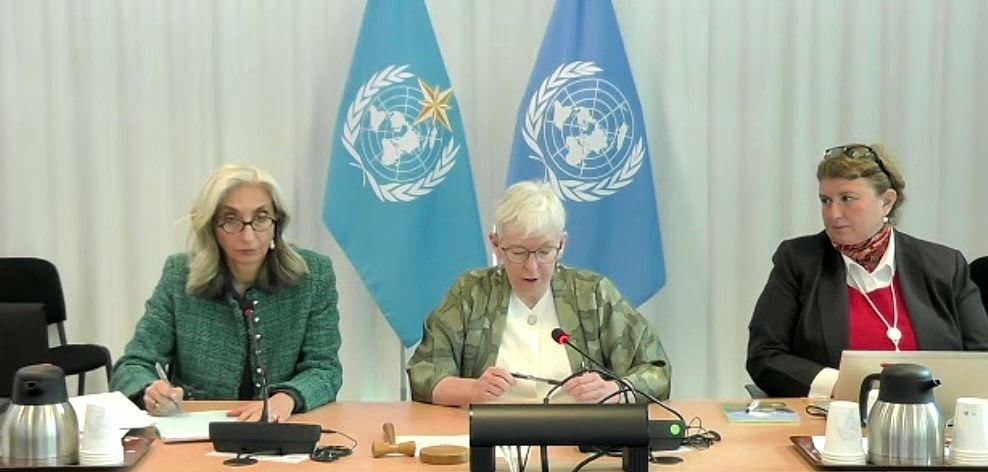
The 10th Meeting of the United Nations Coalition on Combating Sand and Dust Storms took place from 19 to 20 March 2025 at the World Meteorological Organization headquarters in Geneva. The meeting was Jointly organized by the Coalition co-chairs- Asian and Pacific Centre for the Development of Disaster Information Management (APDIM) on behalf of ESCAP and ESCWA- to assess ongoing efforts and strengthen coordinated action in addressing the growing challenges of sand and dust storms (SDS).
Over two days, attendees reviewed recent activities, discussed ways to improve strategies and approaches to SDS mitigation, and initiated plans for the implementation of the United Nations Decade on Combating Sand and Dust Storms (2025–2034).
The opening session featured remarks from Ms. Ko Barrett, Deputy Secretary General of the World Meteorological Organization, who called for more strategic and efficient UN action amid growing global challenges. Ms. Carol Chouchani Cherfane, Director of Arab Centre for Climate Change Policy (ACCCP) of ESCWA and Ms. Letizia Rossano, Director of Asian and Pacific Centre for the Development of Disaster Information Management (APDIM) of ESCAP emphasized the need for clearer common goals and moving from fragmented efforts to joint, visible action.
The Coalition members assessed progress made by its working groups and took a closer look at the structure and content of the United Nations Secretary-General’s annual reports on SDS. Discussions centered on improving reporting categories to better capture the essence of the work of the Coalition, enhance analytical insight, and raise the profile and visibility of SDS across global development and environmental agendas.
Working groups updates highlighted ongoing efforts in areas such as early warning systems, health impacts, regional cooperation, policy frameworks and mitigation efforts. Several participants pointed out the need for more flexible, goal-oriented ways of working together, given current resource and capacity limitations.
The meeting emphasized the need for a stronger, unified Coalition identity. Members agreed to develop a dedicated website and visual identity to improve communication and coherence across platforms.
The Coalition also reviewed upcoming events and coordinated engagement strategies, including participation in the High-Level Event on SDS convened by the President of the General Assembly in July 2025, and planned side events at major global forums such as the Global Platform for Disaster Risk Reduction and the UNCCD COP17 in Mongolia.
Learning from Other UN Decades
Participants drew lessons from other UN Decades, namely Water Action and Ecosystem Restoration decades, focusing on effective approaches for planning, mobilization, and visibility. Emphasis was placed on using the Decade’s action plan as a catalyst for fundraising, showcasing agency mandates, and engaging countries through flagship projects and policy initiatives. The value of structuring work around a well-defined theory of change was highlighted as a way to guide programming and track progress over time.
Vision for the Decade
The Coalition agreed on a strategic vision for the SDS Decade centered on enhancing regional and international cooperation, particularly in the most affected countries. There was a strong consensus on aligning the Decade with existing international frameworks and on organizing a major international conference at the Decade’s midpoint.
Looking Ahead
Next steps and deadlines were set for finalizing the Decade’s action plan, updating Coalition’s online presence, and ensuring active participation in key upcoming events. The co-chairs will coordinate with the Office of the Secretary-General to prepare the first draft of the Decade plan for review and potential launch at the PGA High-Level Event in July 2025.
Additionally, the schedule of activities for the coming year was outlined, including meetings, advocacy campaigns, contributions to international events, and policy development milestones related to the Coalition’s work.
The 10th Meeting concluded with a reaffirmation of members’ commitment to coordinated action, strategic communication, and impactful engagement in the global fight against sand and dust storms.
The twenty members of the United Nations Coalition on Combating Sand and Dust Storms are the ESCAP, ESCWA, CBD, FAO, ICAO, ITU, IUCN, UNCCD, UN DESA, UNDP, UNDRR, UNECE, UNEP, UNFCCC, UN-Habitat, UNITAR, UNU, WHO, WMO, and the World Bank.
APDIM (on behalf of ESCAP) and ESCWA serve as the UN SDS Coalition’s co-chairs for the period 2025–2026, succeeding FAO.
Tags
Related news
-

Press releases
Disaster Risk Reduction Mainstreaming In Development Plans
Asian and Pacific Centre for the Development of Disaster Information Management
16 September 2020
-

News stories
ESCAP Executive Secretary, Ms. Armida Salsiah Alisjahbana, Opening Remarks at APDIM Side Event at CDRR7
Economic and Social Commission for Asia and the Pacific
30 August 2021
-

Press releases
UN Meeting Opens With Call To Expand Regional Networks On Cross-Boundary Disasters
Asian and Pacific Centre for the Development of Disaster Information Management
19 February 2020
-

News stories
Meeting on the Implementation of the Regional Plan of Action on Sand and Dust Storms in Asia and the Pacific
Asian and Pacific Centre for the Development of Disaster Information Management
11 July 2023
-

APDIM in the News
Disaster Risk Reduction Mainstreaming in Development Plans
Islamic Republic News Agency
16 September 2020
-

APDIM in the News
Iran, UN sign MoU to open APDIM office in Tehran
Islamic Republic News Agency
30 January 2018